
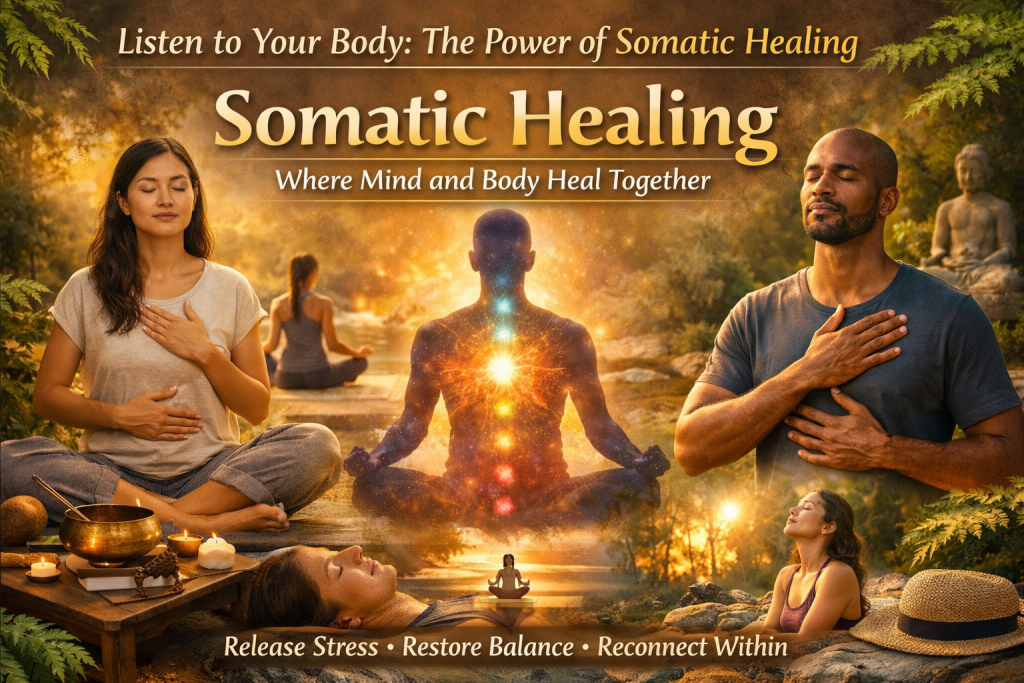
Somatic Healing: The Key to Emotional and Physical Wellness
Today, many people focus on healing through the mind. We read self-help books, attend counseling sessions, practice positive thinking and seek solutions through logic and analysis. While these approaches can be valuable, they often overlook an important truth:
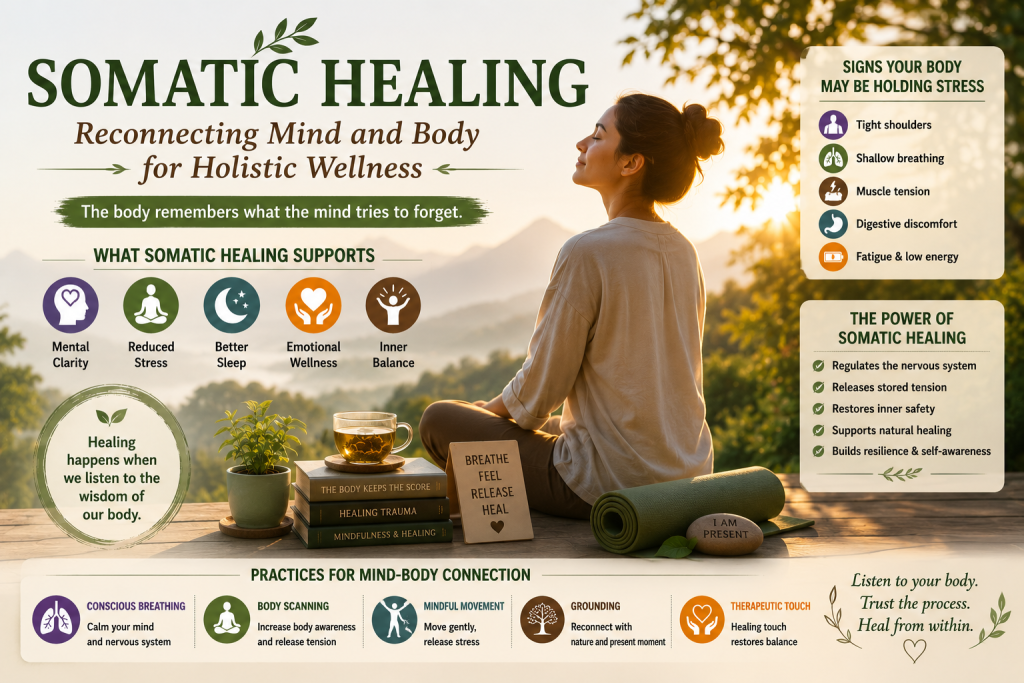
The body remembers what the mind tries to forget.
Stress, trauma, anxiety, grief, fear and emotional challenges do not exist only in our thoughts. They can also become stored within the body, influencing posture, breathing, muscle tension, sleep, digestion and overall wellbeing.
This understanding forms the foundation of a growing holistic wellness approach known as Somatic Healing.
Somatic healing is gaining attention worldwide because it recognizes the deep connection between the mind and body. Rather than viewing emotional and physical health separately, it acknowledges that true healing often requires addressing both together.
For individuals seeking natural, holistic and sustainable wellness solutions, somatic healing offers a powerful pathway toward greater balance, resilience and self-awareness.
What is Somatic Healing?
The word “somatic” comes from the Greek word soma, meaning “the living body.”
Somatic healing refers to therapeutic practices that focus on bodily sensations, movement, breath and physical awareness to support emotional and physical healing.
Unlike approaches that focus primarily on thoughts and emotions, somatic healing pays attention to how experiences are expressed within the body.
For example, many people notice physical symptoms during stressful situations:
- Tight shoulders
- Clenched jaw
- Shallow breathing
- Rapid heartbeat
- Digestive discomfort
- Muscle tension
These are not random reactions. They are the body’s way of responding to emotional and psychological experiences.
Somatic healing helps individuals recognize, understand and release these patterns.
The Mind-Body Connection
For centuries, traditional healing systems have emphasized the inseparable connection between mind and body. Ancient wellness traditions such as Yoga, Ayurveda, Traditional Chinese Medicine, Meditation practices, Naturopathy, all recognize that emotional distress can influence physical health and vice versa.
Modern science increasingly supports this perspective.
Researchers have found that chronic stress can affect:
- Immune function
- Hormonal balance
- Digestion
- Cardiovascular health
- Sleep quality
- Pain perception
Similarly, unresolved emotional experiences may contribute to ongoing physical discomfort and tension.
Somatic healing bridges these connections by helping individuals become more aware of how their bodies communicate.
Why somatic healing matters today?
Modern lifestyles expose people to unprecedented levels of stress.
Many individuals experience:
- Work pressure
- Financial concerns
- Information overload
- Digital fatigue
- Social isolation
- Burnout
Often, these experiences accumulate gradually.
People may learn to ignore their body’s signals until symptoms become difficult to manage.
Some common signs of prolonged stress include:
- Chronic fatigue
- Muscle tension
- Poor sleep
- Anxiety
- Digestive issues
- Headaches
- Reduced concentration
Somatic healing encourages individuals to listen to these signals rather than suppress them. Instead of asking, “What is wrong with me?” It encourages a different question: “What is my body trying to tell me?”
How somatic healing works?
Somatic healing helps regulate the nervous system by increasing awareness of bodily sensations and responses.
When people experience stress or danger, the nervous system activates protective responses such as fight, flight, freeze. These responses are natural survival mechanisms.
However, when stress becomes chronic, the body may remain in a state of heightened alertness even when no immediate danger exists.
This ongoing activation can contribute to emotional and physical health challenges.
Somatic practices help the body recognize safety again.
As the nervous system becomes more regulated, individuals often experience reduced stress, improved emotional balance, better sleep, increased energy, enhanced resilience, etc.
Somatic Healing and Holistic Health
Holistic health views wellness as the integration of:
- Physical wellbeing
- Mental wellbeing
- Emotional wellbeing
- Social wellbeing
- Spiritual wellbeing
Somatic healing aligns perfectly with this philosophy because it addresses the whole person rather than isolated symptoms.
A holistic approach recognizes that:
- Chronic stress affects digestion
- Emotional health influences immunity
- Breathing impacts mental clarity
- Movement supports emotional release
Healing occurs most effectively when all aspects of wellbeing are considered together.
Somatic healing becomes one important piece of a broader wellness journey.
Practical somatic healing techniques
One of the greatest strengths of somatic healing is its accessibility.
Many practices can be incorporated into daily life without specialized equipment.
1. Conscious Breathing
Breathing patterns often change during stress.
People may breathe rapidly, shallowly, or hold their breath without realizing it.
Simple breathing exercises can help:
- Calm the nervous system
- Improve focus
- Reduce tension
- Support emotional regulation
A few minutes of slow, mindful breathing each day can make a significant difference.
2. Body Scanning
Body scanning involves gently paying attention to physical sensations throughout the body. Questions might include:
- Where am I holding tension?
- How does my body feel today?
- Is there tightness, heaviness, or discomfort?
This practice improves body awareness and helps identify stress patterns before they become overwhelming.
3. Mindful Movement
Movement is a powerful way to release accumulated stress.
Examples include:
- Yoga
- Stretching
- Walking
- Tai Chi
- Gentle exercise
The goal is not intense physical exertion but mindful connection with the body.
Many people notice emotional shifts after movement because the body and mind are closely connected.
4. Grounding Practices
Grounding techniques help bring attention back to the present moment. Simple examples include:
- Walking barefoot on grass
- Sitting quietly in nature
- Feeling physical contact with the floor
- Focusing on sensory experiences
Grounding can reduce anxiety and improve emotional stability.
5. Therapeutic Touch
Various holistic therapies incorporate touch-based approaches to promote relaxation and body awareness.
Examples include:
- Massage therapy
- Acupressure
- Reflexology
- Therapeutic bodywork
These practices may help reduce tension and encourage nervous system regulation.
Somatic Healing and Trauma Recovery
One reason somatic healing has gained significant attention is its role in supporting trauma recovery. Traumatic experiences can affect the body long after the event has passed. Individuals may experience:
- Hypervigilance
- Emotional numbness
- Muscle tension
- Sleep disturbances
- Anxiety
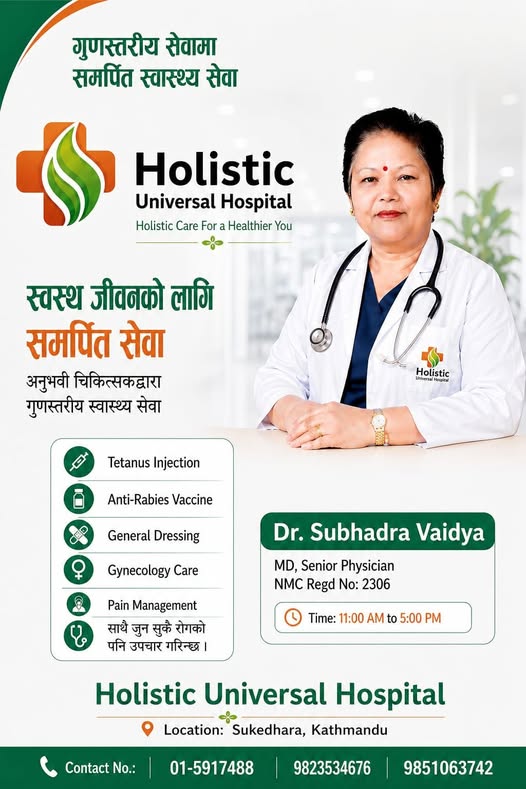
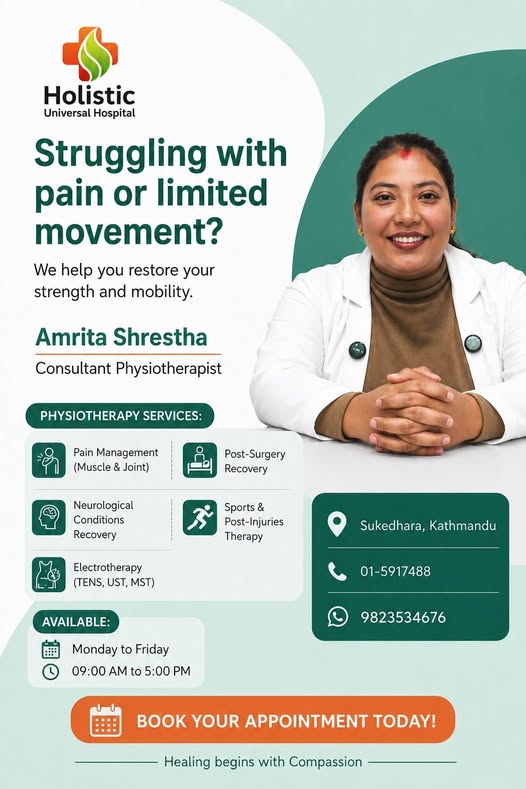
Our Doctors Profile
Somatic approaches focus on creating safety within the body rather than forcing individuals to relive difficult experiences. This gentle approach can help individuals gradually reconnect with their sense of wellbeing.
Hidden Benefits of Somatic Healing
Many people begin somatic healing seeking stress relief but discover additional benefits.
These include:
✅ Improved Sleep
As the nervous system becomes calmer, sleep quality often improves naturally.
✅ Better Digestion
Stress significantly influences digestive function.
Reduced stress may support healthier digestion and gut health.
✅ Increased Self-Awareness
People often become more attuned to their needs, boundaries and emotional patterns.
✅ Enhanced Emotional Resilience
Somatic practices can improve the ability to navigate life’s challenges with greater calm and adaptability.
✅ Greater Mind-Body Harmony
Many individuals report feeling more connected to themselves and their overall wellbeing.
Integrating somatic healing into daily life
You do not need hours of practice each day to benefit from somatic healing. Small consistent habits can have a meaningful impact. Consider:
- Taking mindful breathing breaks during work
- Practicing gentle stretching each morning
- Spending time in nature
- Limiting digital overload
- Incorporating yoga or meditation
- Receiving therapeutic bodywork when appropriate
- Listening to your body’s signals rather than ignoring them
Consistency often matters more than intensity.
The future of wellness is body awareness
As healthcare and wellness continue to evolve, there is growing recognition that true healing involves more than treating symptoms. People are increasingly seeking approaches that address root causes, improve resilience and support long-term wellbeing.
Somatic healing represents a return to a simple yet profound truth: The body is not separate from the mind. It is an essential part of the healing process.
In a world filled with constant stimulation, pressure and distraction, reconnecting with the body’s wisdom may be one of the most valuable wellness practices available.
By combining somatic healing with holistic health principles such as mindful nutrition, yoga therapy, natural healing, meditation and lifestyle balance, individuals can create a stronger foundation for lifelong wellbeing.
Sometimes, the path to healing begins not by thinking more, but by listening more closely to what the body has been saying all along.
📍 Visit us at: Holistic Universal Hospital: https://maps.app.goo.gl/BpToD4xy3k6NaE8K8
📞 Book your appointment today: 01-5917488/ 9767987966
🌐 Learn more: https://holisticuniversal.com/
📅 Open: 7 days a week
You May like to Read more Blog
Yoga: Nature’s Stress Medicine
Forest Therapy: Returning to the Woods for Holistic Healing
Acupressure: Ancient Healing Touch for Modern Holistic Wellness
Special Offer by Holistic Universal Hospital
Leave a reply