
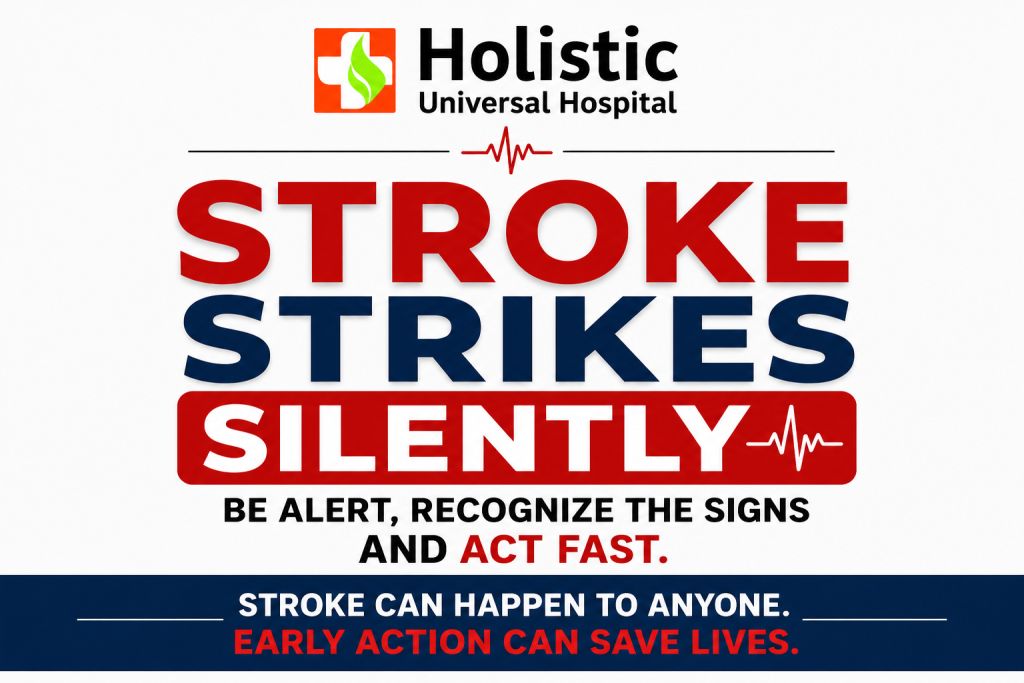
Stroke Strikes Silently: Be Alert, Recognize the Signs and Act FAST
Stroke Can Happen Suddenly—Knowing the Signs Can Save a Life
A stroke is a serious medical emergency that occurs when blood flow to part of the brain is interrupted or when a blood vessel in the brain bleeds. Because brain tissue depends on a continuous supply of oxygen and nutrients, prompt medical assessment is critical when stroke symptoms appear.
The message in this health-awareness campaign from Holistic Universal Hospital is simple: “Stroke Strikes Silently. Be Alert, Act FAST!”
Recognizing the warning signs and seeking emergency medical attention without delay can make an important difference in stroke care and recovery.
What Is a Stroke?
A stroke occurs when the brain’s blood supply is disrupted. The two major types are ischemic stroke, caused by a blockage of blood flow, and hemorrhagic stroke, caused by bleeding from a blood vessel in or around the brain.
Stroke can affect movement, speech, vision, memory and other brain functions. Some people may experience significant disability after a stroke, making rapid recognition and treatment especially important.
Remember FAST: The Key Warning Signs of Stroke
One of the simplest ways to recognize common stroke symptoms is the FAST method.
F – Face
Ask the person to smile.
Look for:
- Drooping or weakness on one side of the face.
- An uneven smile.
- Difficulty moving one side of the face.
Sudden facial weakness can be a warning sign of stroke.
A – Arms
Ask the person to raise both arms.
Watch for:
- Weakness in one arm.
- Numbness on one side.
- Difficulty keeping one arm raised.
Sudden weakness or numbness, particularly on one side of the body, requires urgent medical attention.
S – Speech
Ask the person to speak a simple sentence.
Possible warning signs include:
- Slurred speech.
- Difficulty speaking.
- Difficulty understanding speech.
- Confused or unusual speech.
Speech problems that begin suddenly can be an important sign of stroke.
T – Time to Act
If any of these symptoms appear suddenly, do not wait to see if they improve.
Stroke is a medical emergency. Seek emergency medical assistance immediately. Even if symptoms disappear after a short period, urgent medical assessment is still necessary because the episode could represent a transient ischemic attack (TIA).
Other Possible Stroke Symptoms
FAST helps identify many common stroke symptoms, but stroke can present in other ways.
Possible symptoms include:
- Sudden numbness or weakness on one side of the body.
- Sudden difficulty seeing.
- Sudden confusion.
- Difficulty understanding or producing speech.
- Sudden dizziness or problems with balance.
- Difficulty walking.
- A sudden, severe headache.
- Nausea or vomiting in some cases.
Because symptoms can vary, any sudden neurological change should be taken seriously.
Stroke Risk Factors You Should Know
The awareness poster highlights several important factors associated with stroke risk:
High Blood Pressure
High blood pressure is one of the major modifiable risk factors for stroke. Regular monitoring and appropriate medical management can help reduce cardiovascular and stroke risk.
Smoking
Smoking damages blood vessels and is an important preventable risk factor for stroke. Avoiding tobacco and exposure to secondhand smoke is an important part of cardiovascular health.
Diabetes and Obesity
Diabetes and excess body weight can contribute to cardiovascular risk. Managing blood sugar, maintaining a healthy weight and following appropriate medical advice can support stroke prevention.
Stress and Unhealthy Diet
A healthy lifestyle can contribute to better cardiovascular health. A balanced diet and appropriate stress-management strategies can form part of an overall approach to reducing health risks.
Our Doctors
Lack of Physical Activity
Regular physical activity is an important component of a healthy lifestyle. Along with appropriate nutrition and weight management, staying physically active can support cardiovascular health.
What Should You Do if You Suspect a Stroke?
If someone suddenly develops facial weakness, arm weakness, speech difficulty or another concerning neurological symptom:
Act immediately.
Do not wait for the symptoms to disappear. Do not attempt to diagnose the type of stroke at home.
Seek emergency medical care and tell healthcare professionals when the symptoms started, if known. The timing of symptoms can be important in evaluating stroke and determining appropriate treatment.
Even when symptoms disappear, urgent medical assessment is still important because a TIA can have similar symptoms and may indicate an increased risk of a subsequent stroke.
Why Early Medical Assessment Matters
Stroke diagnosis generally requires professional assessment and may involve neurological examination, blood tests and brain imaging such as CT or MRI. Doctors may also use other investigations, including an ECG, depending on the clinical situation.
The type of stroke must be determined before doctors can select appropriate treatment. This is one reason why suspected stroke should be treated as an emergency rather than managed at home.
Can Stroke Be Prevented?
Not every stroke can be prevented, but several important risk factors can be managed.
A preventive health approach may include:
- Monitoring and managing blood pressure.
- Managing diabetes as advised by a healthcare professional.
- Avoiding smoking and tobacco.
- Maintaining a healthy body weight.
- Eating a balanced diet.
- Staying physically active.
- Following prescribed treatment for existing health conditions.
- Attending appropriate health check-ups.
Managing these factors can help reduce cardiovascular and stroke risk.
Stroke Care at Holistic Universal Hospital
Holistic Universal Hospital in Sukedhara-4, Kathmandu promotes awareness of stroke symptoms and the importance of timely medical attention.
The hospital’s health-awareness message encourages people to recognize stroke warning signs, understand important risk factors and seek professional medical care when symptoms occur.
For medical evaluation or treatment, patients should consult qualified healthcare professionals who can assess their symptoms and recommend appropriate investigations and care.
Frequently Asked Questions About Stroke
What is the first sign of a stroke?
Stroke symptoms often begin suddenly. Common signs include facial weakness, arm weakness or numbness and speech difficulty. The FAST method is a useful way to remember these warning signs.
What does FAST stand for in stroke?
FAST stands for Face, Arms, Speech and Time. It helps people recognize some of the most common sudden stroke symptoms and emphasizes the need for immediate action.
Can stroke symptoms disappear?
Yes. Symptoms can sometimes disappear after a short period. This may happen with a transient ischemic attack (TIA), but it should still be treated as an urgent medical problem because a TIA can be a warning sign of a future stroke.
Is high blood pressure a risk factor for stroke?
Yes. High blood pressure is an important modifiable risk factor for stroke. Regular monitoring and appropriate treatment are important components of cardiovascular health.
Can smoking increase stroke risk?
Yes. Smoking is a recognized modifiable risk factor for stroke. Quitting smoking and avoiding secondhand smoke can contribute to better cardiovascular health.
What should I do if I think someone is having a stroke?
Treat it as a medical emergency. If sudden stroke symptoms such as facial drooping, arm weakness or speech difficulty appear, seek emergency medical assistance immediately rather than waiting for the symptoms to improve.
Final Message: Be Alert, Act FAST
Stroke can happen suddenly, and the first signs may be easy to overlook. Knowing the warning signs can help families, friends and communities respond quickly.
Remember:
FACE – Is one side of the face drooping?
ARMS – Is one arm weak or numb?
SPEECH – Is speech suddenly unclear or difficult?
TIME – Act immediately and seek emergency medical care.
When it comes to stroke, every moment matters. If you notice sudden symptoms that could indicate a stroke, seek urgent medical attention.
Holistic Universal Hospital
Sukedhara-4, Kathmandu
Phone: 01-5917488
Email: holistichospital22@gmail.com
This article is intended for health education and awareness. It does not replace professional medical diagnosis or treatment. If you suspect a stroke, seek emergency medical care immediately.
You May like to Read more Blog
Hot Stone Therapy in Nepal: Holistic Universal Hospital
Summer Wellness Guide: Natural Ways to Take Care of our Body
Somatic Healing: The Key to Emotional and Physical Wellness
Leave a reply